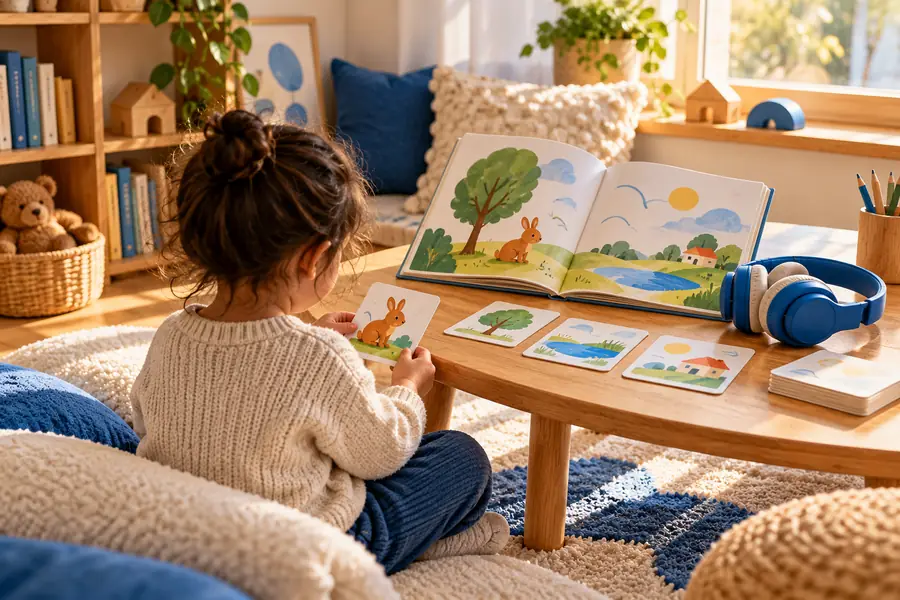
A read aloud for preschool works best when the words, pacing, and listening goal are simple enough to follow together. Prepare your text, send it to Readaloud, and shape a calmer routine for story time, circle time, or quiet practice.
Preschool listening activities already move through a familiar loop: choose a short text, introduce the idea, read with expression, then invite children to respond.
where we slot in
Readaloud fits between text selection and the live listening moment, giving an educator or caregiver a prepared version to review before the group hears it.
1
Choose a focused passage
Start with a short story, poem, classroom note, or decodable passage that has one clear idea and language suited to the preschool group.
2
Describe the delivery
Ask for a gentle pace, clear articulation, expressive emphasis, or pauses that give children time to look, point, predict, or repeat.
3
Review and use
Listen through the generated reading before the activity, adjust the source or instruction if needed, and pair the audio with your existing discussion.
before/after
The same source can feel very different when the delivery is planned around young listeners rather than treated as plain text.
Unprepared source
Guided listening version
Keep the words familiar, then use pacing and pauses to make the listening task easier to follow.
deliverable spec
A useful preschool reading is not only audible. It should be easy for an adult to preview, easy for children to track, and easy to place inside an existing activity.
Preschool teacher
Prepare a short story for circle time when the teacher needs to manage materials, attention, and discussion at once.
A reviewed reading gives the group a consistent model while the teacher stays ready to point, pause, and ask questions.
Bring a short passage and a clear delivery goal. Readaloud can help you turn that starting point into a reviewed listening version that fits the rhythm of your classroom or home routine.
It is a shared listening activity built around a short story, poem, picture-book passage, or other child-appropriate text. An adult presents the words with clear pacing and expression, then invites children to notice, respond, repeat, or discuss.
Aim for a calm, understandable delivery with natural expression and pauses that leave room for children to look, think, or answer. The right pace depends on the group, so review the reading and adjust the source or instructions when a section feels rushed.
Short texts with familiar vocabulary, repeated patterns, a clear sequence, or strong picture support are usually easier to use. Choose material that matches the children’s attention span and the single idea you want the activity to reinforce.
Yes, it can fit before a circle-time discussion, during a transition, as part of a vocabulary activity, or in a quiet listening station. The adult should preview the result and keep the final activity aligned with the group’s needs.
Yes. Reviewing helps you check pronunciation, pacing, emphasis, and whether the delivery suits the children and the purpose of the activity. You can then revise the text or prompt before sharing it with the group.