YouTube voice workflow
Make YouTube content easier to hear with read aloud for youtube
Read aloud for youtube workflows help creators review scripts, listen for awkward phrasing, and prepare spoken content before publishing. Move from written material to a clearer listening pass without losing control of the source.
When YouTube scripts look fine but sound wrong
A script can be grammatically correct and still feel stiff, rushed, repetitive, or difficult to follow aloud. These related guides cover adjacent ways to listen to and review written content.
Three concrete workflows for YouTube creators
Choose the workflow that matches where you are in production: planning, revising, or checking the finished words before they become a recording.
-
1
Listen before you record
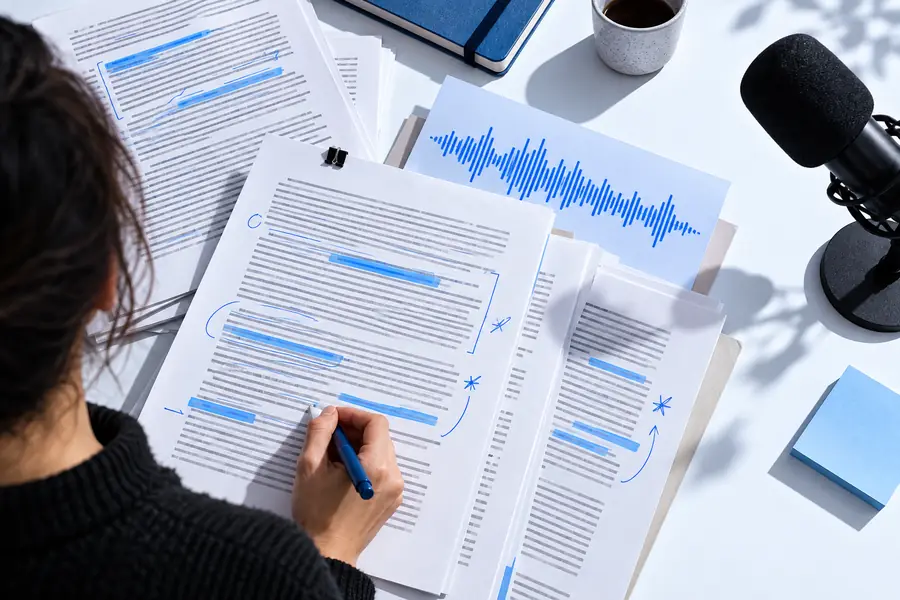
Paste or prepare the draft and listen for sentences that are too dense, abrupt, or difficult to say in one breath. Mark the places where the spoken version no longer matches the intended tone.
-
2
Check captions against the script
Use the spoken pass to notice missing words, repeated phrases, confusing transitions, and places where punctuation creates an unnatural pause. Revise the source text before final caption work.
-
3
Review the final narration
Listen again after editing the script or transcript. Check names, numbers, technical terms, and calls to action manually so the final version reflects what you actually want viewers to hear.
Example output: a listening-ready YouTube draft
The comparison below shows what a useful review pass should clarify. It is not a substitute for checking the actual recording, captions, or rights attached to source material.
Unreviewed script
Listening-ready draft
Sentence length
Unreviewed script
Long sentences carry several ideas at once.
Listening-ready draft
Ideas are split where a listener needs a reset.
Punctuation
Unreviewed script
Commas and dashes may not create the intended pauses.
Listening-ready draft
Punctuation supports the pace and emphasis of the narration.
Transitions
Unreviewed script
Topic changes can feel sudden when heard.
Listening-ready draft
Signposts make each section change easier to follow.
Technical terms
Unreviewed script
Names, acronyms, and numbers are not specially checked.
Listening-ready draft
Important terms are reviewed against the source before publishing.
Call to action
Unreviewed script
The ending may sound buried in the final paragraph.
Listening-ready draft
The requested action is separated and easy to hear.
Caption readiness
Unreviewed script
The spoken rhythm may expose awkward caption breaks later.
Listening-ready draft
The script has been heard once before captions are finalized.
- Before: written source
- After: spoken draft
The visual distinction is a review model: clarify the words first, then verify the recording and captions against the approved source.
The page's workflow has three practical checkpoints. Each one catches a different class of problem before your YouTube words reach an audience.
- 1 Plan, revise, and review the spoken draft
- 3 checks
- 2 Keep the approved script as the reference version
- 1 source
- 3 Verify names, numbers, rights, and captions manually
- 0 assumptions
Compliance notes for spoken YouTube content
A read-aloud workflow improves review, but it does not grant permission to reuse material or guarantee that a finished video meets platform, copyright, or accessibility requirements.
-
It cannot clear copyright
Listening to an article, transcript, video, or post does not give you permission to reproduce, narrate, or upload it.
WorkaroundUse material you own, have licensed, or can lawfully quote, and keep records for third-party assets.
-
It cannot verify every pronunciation
Names, brands, locations, acronyms, and specialist vocabulary may still need a human check against a trusted source.
WorkaroundCreate a pronunciation list and compare the spoken result with the approved spelling and reference audio.
-
It cannot replace caption review
A spoken pass may reveal caption problems, but it does not ensure timing, punctuation, speaker labels, or accessibility are correct.
WorkaroundReview the final caption file against the finished narration before publishing.
-
It cannot judge the whole video
A clear script does not prove that visuals, music, claims, thumbnails, or calls to action are suitable for your audience or channel.
WorkaroundRun a separate editorial, factual, brand, and platform-policy review on the complete video.
Give your next YouTube script a listening pass
Send a focused YouTube script task through the Readaloud workflow, then use the result as a review aid—not as a replacement for editorial judgment. You stay responsible for the source, the recording, the captions, and the final upload.
Review a YouTube script- Catch awkward phrasing before recording
- Keep one approved source for revisions
- Check publishing requirements separately
Questions about read aloud for youtube
These answers address common questions about using a read-aloud workflow with YouTube scripts, transcripts, and spoken content.
It usually means listening to YouTube-related written material, such as a script, transcript, caption draft, or research notes, so you can review how it sounds when spoken. The listening pass helps reveal wording and pacing issues before publication.
You can use a read-aloud workflow to review or prepare spoken text for a video. You still need to create or approve the narration, visuals, captions, music, and other production elements, and you must have the rights to any source material you use.
It can help you notice words, transitions, or punctuation that sound inconsistent with the intended narration. It cannot certify caption timing, speaker labels, accessibility, or platform compliance, so the final caption file needs a separate review.
Yes, it is useful for hearing whether a script or transcript feels natural, understandable, and appropriately paced. Review proper names, numbers, technical terms, claims, and calls to action manually before recording or publishing.